Scenario
Simulating load on an e-commerce API where multiple users access data every few seconds. A total of 100 requests are executed using concurrent virtual users to measure response time and system behavioour.
Configuration
- Endpoint: https://automationexercise.com/api/brandsList
- Thread Group:
- Number of Threads: 25 users
- Ramp-Up Period: 100 seconds
- Loop Count: 4
👉 Total Requests:
25 × 4 = 100 requests
- HTTP Request:
- Method:
GET - Protocol:
https - Server Name: automationexercise.com
- Path: api/brandsList
- Method:
API Performance Testing Workflow:
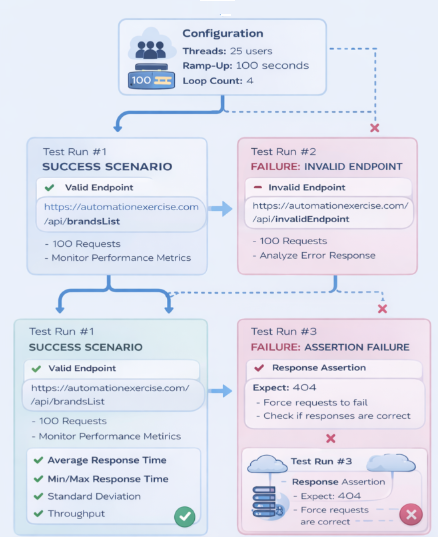
Testing Execution with Jmeter:
Test Run #1 — Success Scenario
✔️What happens:
- All requests sent successfully
- API responds with valid data.
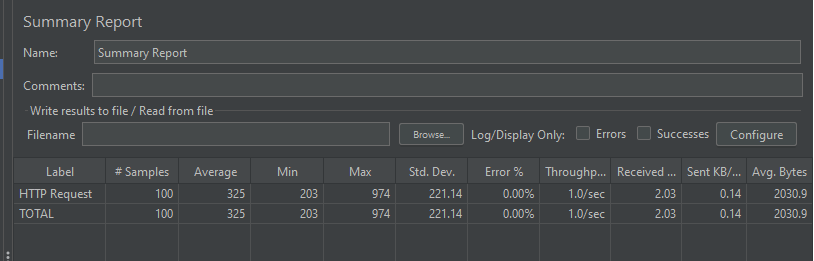
📊 What to analyze:
- Average Response Time → overall performance
- Min / Max → consistency
- Standard Deviation → stability under load
- Throughput → requests per second
Interpretation :
- Acceptable average → system performs well
- Low deviation → stable responses
- Low throughput → light load simulation
❌ Test Run #2 — Failure (Invalid Endpoint)
👉 Change endpoint to:
/api/invalidEndpoint
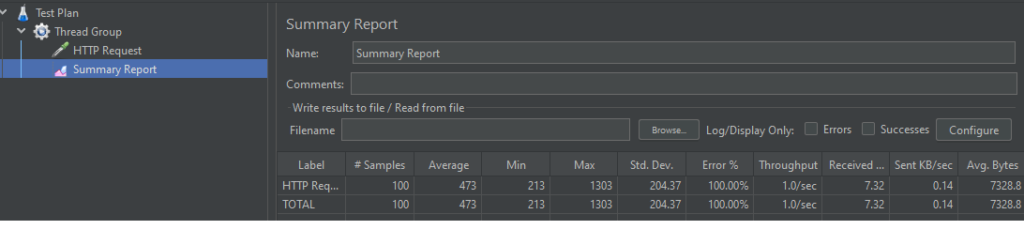
✔️ What this tests:
- How system handles incorrect requests
- Error response behaviour
❌ Test Run #3 — Assertion Failure
Add Response Assertion:
- Expect:
200 - Force failure by expecting wrong value (e.g.
404)
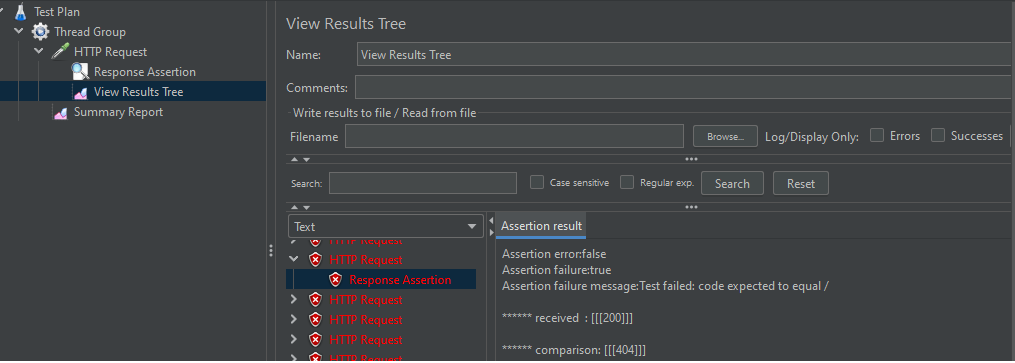
✔️ What this tests:
- Validation logic
- Detection of incorrect responses
❌Test Run #4 —Overload Method
Changing number of thread as 500 and ramp-up period as 0.01 seconds, and delay as 5000 ms
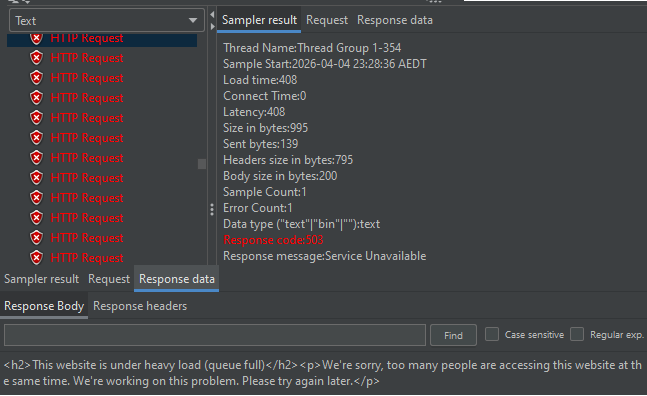
✔️ What this tests:
- System behaviour under extreme load
- Stability when handling concurrent users
- How the API responds when overloaded (e.g., 503 errors)
What This Demonstrates:
- Performance testing under load
- System behavior with multiple users
- Error handling (invalid requests)
- Validation of expected responses
- QA mindset beyond functional testing
“Performance testing is not just about speed. it’s about understanding how the system behaves when real users hit it.”